Research

Climatic effects and feedbacks of large ice sheets

Ice sheets play a central role in the evolution of Earth’s climate system; their albedo, topographic relief, and mass changes profoundly affect global and regional climate patterns. Throughout Earth’s history, ice sheets repeatedly expanded and retreated, accompanied by dramatic changes in sea level, high‑latitude ocean circulation, monsoon systems, and global temperature fields. Reconstructing and understanding this sweeping paleoclimate history is both challenging and compelling. Today, as we again face a rapidly warming era, how will future melt of the Greenland and Antarctic ice sheets affect the globe in the long term? To answer these questions, we systematically study the climatic effects and feedback processes of ice sheets and use mathematical and physical methods to quantify their mechanisms within the Earth system.

Research illustration

Ice-sheet numerical modeling and Earth system model development

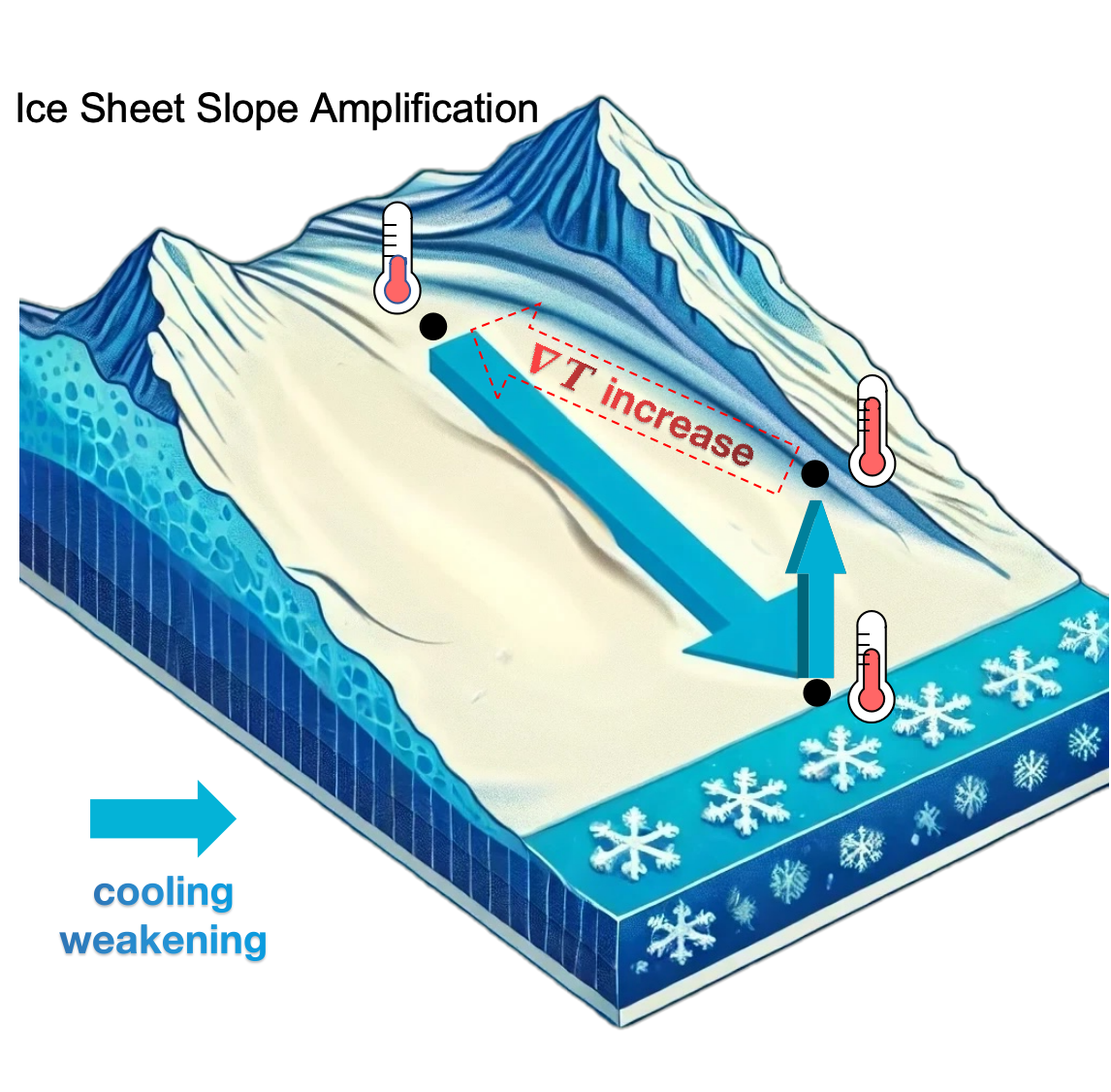
Ice sheets are large glacial bodies exceeding 50,000 km² that can persist on land; today they are primarily the Greenland and Antarctic ice sheets, storing over 70% of Earth’s freshwater. Despite their rigid appearance, ice sheets are effectively slow‑moving viscous fluids whose evolution can be described by fluid dynamics equations. Through appropriate approximations and parameterizations, numerical models can reconstruct ice‑sheet motion and changes to explain observed evolution. Yet key questions remain: which approximations are most suitable? how to design robust parameterizations? how to specify and couple boundary conditions for atmospheric and oceanic processes (e.g., surface and basal mass balance)? These are active topics in ice‑sheet modeling that require continued exploration and refinement.

Research illustration

Quaternary paleoclimate simulations (GREB‑ISM)

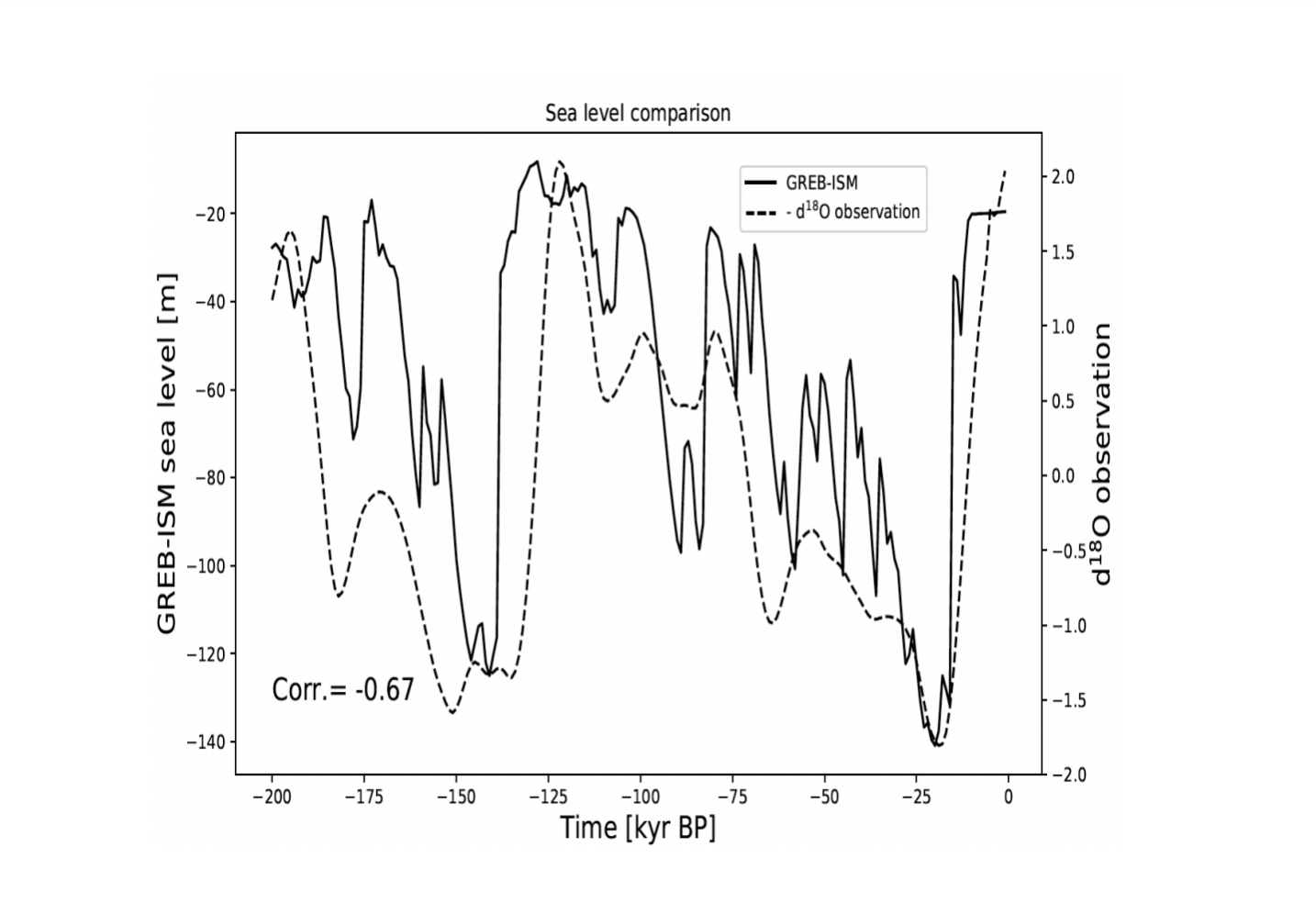
Although only the Greenland and Antarctic ice sheets remain today, multiple ice sheets repeatedly waxed and waned in the Northern Hemisphere during the Quaternary, profoundly influencing global climate. Geological records offer insights into paleoclimate variability, yet many puzzles remain—such as the mechanisms of ice‑sheet evolution and their relation to glacial–interglacial cycles. To better understand these questions, we developed a Quaternary paleoclimate modeling framework GREB‑ISM, to investigate multi‑scale coupling between ice‑sheet dynamics and the climate system and to reveal the key roles of ice‑sheet feedbacks in global evolution. Improving GREB‑ISMand using its simulations to explore ice–climate interactions is an important direction for our future work.

Research illustration

Wasserstein distance and advanced mathematical methods in climate science

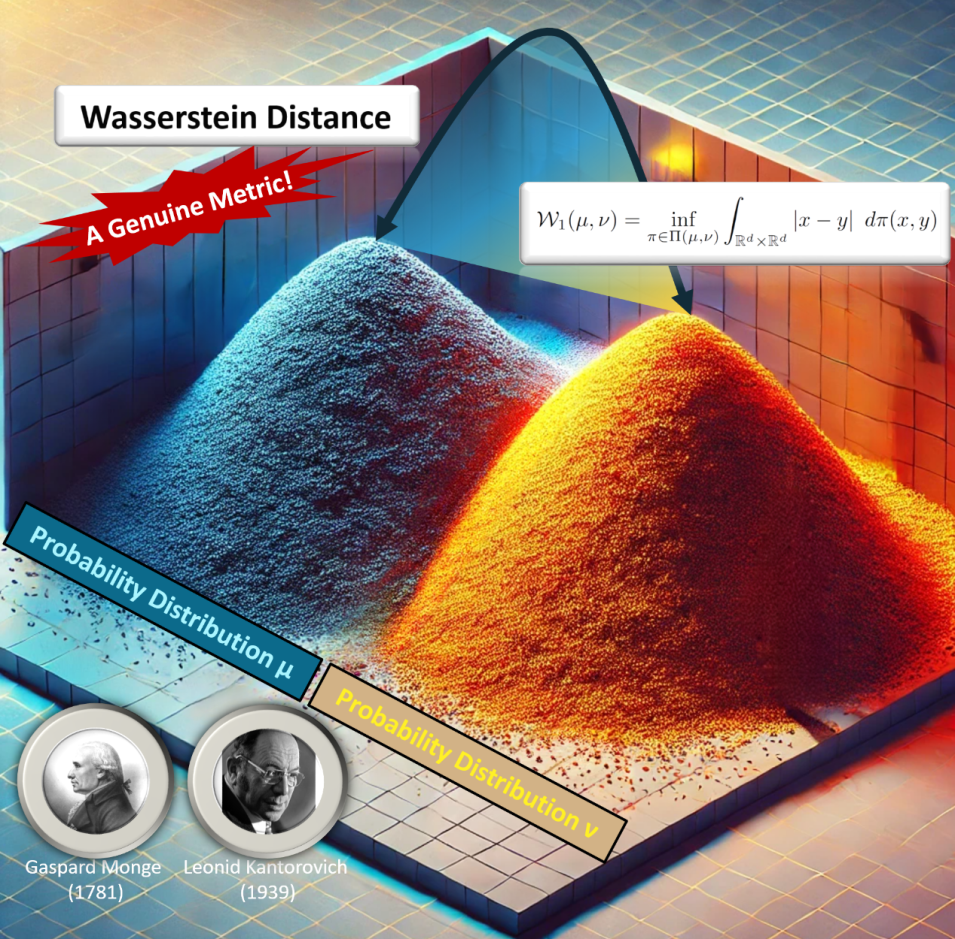
Many classical statistical methods in climate science suffer from limited reliability and under‑utilization of large datasets. With rapid advances in applied mathematics, powerful tools such as optimal transport have shown strong capabilities across other fields, yet remain underused in climate research. Bridging the paradigms of meteorology and mathematics to introduce rigorous, innovative methods into climate science is both interesting and challenging. Together with collaborators, we explore applications of the Wasserstein distance to meteorological and climate data, aiming to foster interdisciplinary integration and provide new avenues for applying mathematical methods in climate research.

Research illustration

Projects

Publications

Journal Articles


Upper‐troposphere saddle‐like response to springtime surface sensible heating over the Tibetan Plateau combined effect from baroclinic and barotropic process

Published in Journal of Geophysical Research: Atmospheres, 2022

Recommended citation: Zhao, Y., Sun, R., Xie, Z.*, and Duan, A. (2022). Upper‐troposphere saddle‐like response to springtime surface sensible heating over the Tibetan Plateau: combined effect from baroclinic and barotropic process. Journal of Geophysical Research: Atmospheres, 127, 1–18.
Download Paper

云南省秋季降水时空分布规律

Published in 云南地理环境研究, 2013

Recommended citation: 谢志昂, 朱欢欢, 林茂军, 曹杰* (2013). 云南省秋季降水时空分布规律[J]. 云南地理环境研究, 25(2), 106–110.